December 12, 2012

Santa Claus: Threat or Menace?

I have discovered Santa Claus' secrets. He is a tricky wily jolly old elf, and his exact methods are hard to pin down. The man is at least 800 years old, doesn't age, has had more names over his career than Prince, can seemingly travel at the speed of light at a whim with enough elf sweat shop toys in tow to put every toy retailer out of business,. In addition the man routinely breaks into peoples houses and takes their 'milk and cookies', meanwhile leaving behind his ill gotten toys.

The fact that NORAD tracks him every year does nothing to help my suspicions. Clearly they think him a threat to international stability

So how does Mr. Kringle accomplish this superhuman feat annually? 800 years ago giving gifts to every christian child was difficult with modern technology but it has only gotten worse since then. Of the approximately 7 billion people that exist at this moment, 2.2 billion of them consider themselves Christians, I'm willing to venture that a fair number of people celebrate the holiday otherwise. North America, South America, Europe, Australia, Sub-Saharan Africa and parts of Asia are predominantly Christian and so most of the population likely celebrates the holiday regardless of religious affiliation. So we'll say an even 3 billion celebrate Christmas. According to the CIA, 26.3% of the world is under 14, and are thus children applicable for him to give gifts to. That's 789 million kids out there. With an average population density of 13.3 people per sq. km (that's 34.5/ sq. mi). Doing the math that's 58 million sq. km (or 22 million sq mi) to cover in a single 24 hr period (which is being charitable). For perspective the entire Earth is about 510 million sq km (197 million sq. mi)

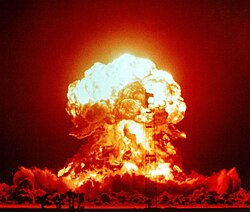
 In order for St. Nick to accomplish that he'd have to be moving around 16 million m/s, that's about 5% of the speed of light (It's probably even more than that since I calculated plain km, not sq km, but just to be on the conservative end of the spectrum). Air molecules vibrate around a couple 100 mi/hr, this means as far as Santa and the reindeer are concerned  the molecules in the air are hanging there frozen. Aerodynamics no longer apply, normally air would get out of the way, but because of the speed of the sleigh, it collides with the front reindeer and begins a fusion reaction , each collision giving off gamma rays and scattered particles. This would cause an explosion everywhere he went, destroying every place he goes to.

Now clearly Santa can't do this, at least not without destroying 2/3's of the landmass. So how does Father Christmas do it? Well, perhaps we're wrong in thinking about time linearly. If Santa were able to bend time and space it would make the whole thing a different possibility.If he were able to say... make space bend he would also be able to store that many toys in a bag and on his sleigh.

What's interesting is that Santa has taken on many different appearances over the years. He's taken on many different names: Kris Kringle, Father Christmas, Tomte, St. Nick, Sinterklauss, Belsnickel and many many others.

So the man has many different bodies, is practically immortal, can bend space and time, and has a sleigh that can clearly hold more than its dimensions should indicate.


Santa Claus is clearly a Time Lord....


December 11, 2012

The Search for E.T. Continues...


As it happens I have the time, the energy and the will to resume my blog, so I’m coming back to this. What better way to begin again than to talk about SPACE!

So pretty


NASA always has interesting news, even if its just interesting to me. Of note are two news bits from extraplanetary probes, the Mars Curiosity Rover and the Messenger satellite. The Curiosity rover turned heads when the lead scientist announced they may have found something that would be ‘one for the history books’ only to renege on said statement. What was found was complex chemistry with carbon in it (methyl chloride to be precise) but the exact origin of these compounds, and whether they’re of martian origin, is still up for debate. The current theory is that carbon from the rover reacted with choride in the martian soil, forming what is is technically an organic compound, but nothing groundbreaking.... Like what was found on Mercury by the Messenger probe

Much more noteworthy than a martian false alarm is the discovery of almost 1 trillion metric tons of ice from 50 cm to 20 meters deep on Mercury. For context that’s 1100 cubic kilometers (around 260 cubic miles) of 
ice this is roughly the same size as the Arctic ice cap . The ice is kept safe in the permanently shadowed poles of Mercury which never receive sunlight due to the planets almost perfectly vertical axis. Some of this ice is exposed and remains as -223 degrees Celsius (that's -370 Fahrenheit), but more interestingly there’s ice where there shouldn’t be, in fairly warm areas above the freezing point. Ice here appears to be insulator by ‘strange dark insulator’ that does seem to be comprised of a complex mix of  organic compounds (including amino acids sugars and proteins), the building blocks of life. Scientists at NASA were quick to say that life on mercury was a long shot, but the data gives hope that life might be found in even the most extreme circumstances outside of Earth and that the universe is a much soggier place than originally expected.

So why the big hunt for water and organic compounds? Organic compounds make sense, we’re made from long chain carbon compounds, and its unlikely that life would choose another method to base itself from. Carbon can form long complex chains, the closest thing to carbon chemically is silicon, but silcon doesn’t form long complex chains. Any silicon based life would be simple, if possible at all. Silicon is a more common element on earth than carbon is, so presumably if it were possible or sustainable it would’ve likely been done.


So why water? Water is often said to be the key component to life, but it’s seldom explained why. Water is an ionic mixture so it can hold many different compounds, salts and other metals, and more importantly it can hold some organic compounds in suspension. Water acts as a solvent, so it can act as a bridge helping various compounds react with eachother, and given it's ionic nature it keeps predominently nonpolar molecules (i.e. most organic molecules) close together, close enough so that they can react and do the processes required for life to occur
. Almost every animal, plant and microbe on the planet has it, even when the environment would dictate that it’s not feasible. Liquid water’s scarcity in the universe however brings up questions of other solvents, like ammonia, would be possible.

The search for life is ultimately a search to try and understand the universe. Are we special snowflakes, an oddity in an otherwise lifeless void. Are we perhaps the most intelligent lifeform out there? Or are we just one among many.

One way or another we will find out. I personally hope it’s sooner rather than later

November 14, 2010

Weight Loss: The Honest Truth

I've been using a lot of colons lately: colons are awesome. So that's alright

With Thanksgiving imminent, looming and inevitable weight gain is upon us. As such, the public consciousness goes into precisely how to get rid of the 'turkey weight', diets begin to spring out of the woodwork: the Atkins diet, the Caveman Diet, South Beach Diet, Mediterranean Diet, Liquid Diet, the Cookie Diet, Dye it diet and the Di tit diet (the last two are fake). This is even including the latest news article that touches on a very plain truth.

The news story going through the media lately has been that Mark Haub, professor of human nutrition at Kansas State University lost 27 pounds (around 12.25 kg) in ten weeks eating only Hostess and Little Debbie snacks once every three hours. Not only that but his LDL cholesterol and triglycerides went down, while protective HDL cholesterol (the good kind) went up.

So what's the take away here? Does this fly in the face of all of the conventional wisdom about diets? Do Twinkies have some hidden health benefits? Do I love asking rhetorical questions?

No, big no, and yes.

Very simply, take in less energy than you use. And since energy and mass are connected (see equation to the right) you will therefore lose mass, this is fundamental physics we're talking about here, regardless of the newest fad. Dr. Haub in total consumed about 1,800 calories as a day versus the 2,600 he consumed before. In taking in less energy (and that is what a calorie is, a unit of energy) he could no longer support the same amount of mass, thus losing weight (most likely fat AND muscle). About 3,500 kcal (kilocalories... which is frequently abbreviated to simply cal for most calculations) is required to lose one pound of body fat. Getting rid of 800 kcal a day for 70 days (10 weeks) represents a calorie deficit of 56,000 kcal. That would be enough to account for a loss of 16 pounds of body fat (56,000/3,500=16)

As for his cholesterol changes, this could just be a side effect of losing weight again, as losing fat overall will make one lose cholesterol in the blood stream, even with the rather fattening substances entering his body.

However as Haub himself is quick to point out, this is NOT a diet to follow. While it is possible to lose weight with Little Debbie and Hostess products, the long term affects are less than advantageous. I'm going to use the Twinkie as an example, for no other reason than it's gotten the most press out of this, and it's fun to say. As we can see from the nutrition facts, (found via the Hostess Website) the common Twinkie is not in fact, that bad for you in terms of pure caloric intake. However, the amount of fat and saturated fat is pretty high. Add that there is no fiber, no protein, and no appreciable amount of any vitamins, except iron, will very quickly lead a person to SEVERE malnutrition.

The stomach itself does not recognize 'calories taken in', it is rather based solely on volume that it determines whether one is full or not. This is the basis behind surgeries like stomach stapling, limiting the amount of food one eats before becoming full.  This is why low calorie things like vegetables, whole grain, lean meats and fruit are important, you will lose weight, get all the necessary amount of vitamins and minerals (which will help weight loss) and will make you feel full.... Something I imagine one Twinkie every three hours would be unable to do.

That and exercise. As said, if you use more energy than you consume, you lose mass.... Works even better when you increase the energy you use while decreasing the energy you consume. Of course sometimes you get hungry BECAUSE you exercise but that gets into a fun recursive loop

So there you have it. It's not especially sexy, nor is it particularly complicated. It is, however hard work...Perhaps that's why we don't get the straight truth about it...

Though I have heard about this new one called the News Diet... You watch the news and feel nauseous, so you don't WANT to eat. I have high hopes for it.

Thanks for reading as always,

Mick

November 8, 2010

A Species in Decline: Sperm

Got your attention? Good.

A warning, this is one of my...less family friendly posts.  
Viewer discretion advised

Now, onward

So this isn't about the so called 'War on Men'. This is, simply put, about how our current methods of business (and life really) aren't particularly friendly to the little swimmers. Chemicals of all sorts (whether intentionally taken in or not) and environment are detrimental to the little fellas. As with most phenomena that occur in life,  multiple reasons lie behind it.

Firstly, even at the best of circumstances, a man's sperm has only 50-70% viability due to the process...that is why males have literally millions at any one time, sort of a quantity over quality production process. For an explanation of 'environment' the thing I am referring to in this case are laptops. Sperm exist best about 2 degrees Celsius below body temperature (so 35 degrees, or 94.8 F, about 4 degrees below body temperature in Fahrenheit). The body itself is fairly good at maintaining this temperature, and has many means in place to keep it at this temperature. Anything above or below this temp results in a decrease in sperm production or killing the sperm period, which is a problem because it takes 72 days to produce a single sperm. Now, why bring this up? The increased use of laptops. A study done at Cornell in 2007 showed that the average laptop user's lap can reach 105 degrees Fahrenheit, well above what is ideal. As a result, males who use laptops in the study were shown to have a smaller sperm count than the norm.

So, just put a laptop on a table right? Problem solved. Wrong. This is merely one of the many things that's killing off the little guys. So let's hit the next thing I discussed: Diet

The average male American takes in about 250 mg of caffeine a day. And most Americans (and most of the world) have a solid caffeine addiction. Caffeine has several known side effects (dehydration, possible impairment of memory and heart problems) but a study in Copenhagen has found another: decreasing sperm count. The study finds that, with Cola specifically, it can decrease your sperm count up to 30% if you drink up to a liter of soda. Now a liter sounds like a lot all at once, however statistics have shown that the average American drinks about 216 liters over the course of a year, so every day the average American drinks approximately .6 liters of soda a day, enough to skill affect the little guys.

It should come as little surprise that alcohol and tobacco, especially in conjunction, have been know to limit sperm count. Unlike alcohol and tobacco, however, there is little evidence that a heightened BMI decreases sperm count, in spite of my rants about the subject. At the other end of the scale, a 'healthy' food can also cause of lowered sperm counts as well.What I'm speaking of is soy products. While a reasonably healthy alternate method to get protein, soy products contain isoflavones, a type of phytoestrogens. Phytoestrogens, as the name implies, act much like estrogen in the body.As a result the male body responds to it in kind, down-regulating the production of male hormones needed to produce sperm, specifically if consumed during childhood when such chemical interference can interfere in the later years.


Now for the REALLY fun one.

What is the biggest scam of the twentieth and twenty-first century? Survey says.... Bottled water! Ignoring the fact that most bottled water does not in fact come from a spring but from a tap (if you're lucky its filtered at some point), there is another rather frightening fact about the stuff.

The bottles have chemicals that leech into the water. These chemicals are called xenoestrogens and are found in most plastic bottles. Much like phytoestrogens as above, when they enter the body they act very much like estrogen, down-regulating male processes (and causing girls to develop more at a younger age).

One specific chemical is called Bisphenol-A (or BPA). BPA is used widely to make plastic harder and watertight tin cans. It is found in most food and drink cans ( including tins of infant formula milk), plastic food containers, and the casings of mobile phones and other electronic goods. It's often referred to as a 'gender bending chemical' and has been linked to increased male infertility. And is toxic in its own right.
BPA

Of course pollution and malnutrition also are common factors towards a decreased sperm count as well.

So what do we come to with all these factors? Is infertility on the rise? Recent studies are saying the answer is... yes some places. In the US, signs seem to point to no, though the topic has become far more prominent, causing a perceived increase in infertility due to a larger public awareness. At least that's the answer so far, without taking into account the many new chemicals flooding the market

Abroad though, for example in China and Britain,  there seems to be a greater indication that infertility is beginning to become a greater problem. For both of these locations there has been a great deal of pollution, as well as an increase in the use of other substances described above

Death by SNOO SNOO!
So what now? Do we think that men will slowly die off, leaving women to rule the earth, searching for men to trade as currency to trade about?

Probably not.

What's more likely is that industrialized nations will continue to have smaller populations while 'third world' nations will continue to balloon up in population. This is exacerbated by industrialized nations having fewer children per couple by choice anyhow. That and the phrase 'third world nation' is becoming an ever increasing misnomer these days anyhow (TED talks are awesome)

The really fun bit is I know some guys who will take these stats as advice to get their sperm count lower...

Can't WAIT to see the ads that pop up with this one

=======================

A few other things, we broke over 100 views this month! Woo
And also, as you can see I did some editing of the overall layout. Look good?

Thanks for reading,

Mick

November 6, 2010

The Lies of Thanksgiving: Tryptophan

In a world, filled with corruption (and stuffing), one man looks to peel back the lies and deceit of this holiday season. In my quest for truth about this holiday season I have stumbled upon the BIGGEST CONSPIRACY since the invention of the aglet (for their purpose is sinister indeed). I stared at the radio, the television, the internet, all feeding me the same horrific lie:

Possibly the best picture I've ever found
Turkey makes you sleepy

I knew the truth, I had to tell it to the world. But I knew THEY would try to stop me. THEY, the old wives tales and embedded ideas of the past that led people astray. I needed to show the truth, to uncover....The Lies of Thanksgiving!

Cue title drop

Yeah, I'm getting weirder... Anyway.

So we hear the same thing every year: its Tryptophan in turkey that makes one sleepy during this gluttonous holiday.

This is, of course, Grade A bull. The truth isn't that simple, and doesn't fit into a single line like "Tryptophan in Turkey causes sleep". There is another reason for sleep, that is directly correlated to this holiday.

Before I get into the details of why, let's first talk about Tryptophan and what it is

What we're talking about: pretty isn't it?
Tryptophan is an amino acid, which, for those of you who don't know, are the building blocks of proteins and enzymes within the body. Tryptophan is one of several amino acids that is 'essential'. In other words we cannot produce these amino acids on our own, we have to take them in through protein (meat, beans, seeds etc...). This is also true of about half of all amino acids (the other half are either produced from amino acids, or are made via other mechanisms).

Firstly, tryptophan is not the most common amino acid within protein. There simply just isn't that much there. I've attached a brief graph below
And I made it myself too!


As you can see, while Tryptophan IS present in turkey, it is no more so than, say beef, chicken or pork, all of which are of comparable content. So then, why do we not associate eating meat (or eggs, or seeds) with being drowsy?


Serotonin and melatonin pathway from Tryptophan


There is some truth behind the myth, Tryptophan is used to produce serotonin. Serotonin is a well known contributor for 'well being' and being 'calm', and in fact an abundance of the stuff WILL make you fall asleep, so there is some credence to this myth. Eating turkey on turkey day WILL make you content and happier. Which is good because the opposing force of your family will try to bring you down.

In fact, serotonin is a very important little chemical, as its deficiency has been linked with sudden infant death syndrome, as well as depression. As a result, it is used as an anti-depressant and will make you fall asleep in high enough dosages... but not the dosage we're talking about when it comes to turkey.

Sleep itself is a complex mechanism, associated with many different chemical neurotransmitters. This includes Melatonin, which also is synthesized from Tryptophan. Melatonin itself does not actually 'cause' sleep. It has far too many other uses in the body as an antioxidant and for the immune system. Another of the key chemicals (and one many people know about) committed to sleep is dopamine, which isn't made from Tryptophan at all but instead from another amino acid called Tyrosine (which turkey, again, has about an average level of).

No, in fact the turkey itself has little to do with why we find ourselves in a veritable coma while watching football (bonus points for  Detroit Lions game "watchers"). The cause is actually the sheer amount of food that we eat. Thanksgiving is, after all, perhaps the most gluttonous holiday of the year

This occurrence is called Postprandial somnolence or, as it's more commonly called, a food coma. This is caused by two things: a lowered state of energy, and general sleepiness caused by neurochemical and hormonal changes in the body, related to the rate glucose (what we get energy from) enters the body.


So let's break this down.


When you eat a lot of food and it hits your stomach and small intestine, it causes a shift in your body's priorities. The activity in your sympathetic nervous system (which controls eyes, heart lungs etc) is down regulated while the activity in your parasympathetic nervous system (which controls the glands and organ for digestion) is up regulated. This shift results in the body being at lower energy and having a desire to rest. The bigger the meal, the more this affects the subject.

In addition, when eating foods with a high glycemic index (so something high in carbs), glucose is absorbed rapidly in the digestive tract and then sent into the blood stream. For people without diabetes, this then sends a massive burst of insulin out to try and keep the blood glucose levels maintained. The sudden burst of insulin induces many other non-charged amino acids to be taken into the muscles...except for tryptophan. This lowers the ratio of these other amino acids in the bloodstream to tryptophan, making tryptophan more preferable to cross the blood brain barrier. Once inside the brain, tryptophan indeed becomes serotonin and melatonin. The increase of both of these substances in the brain directly correlates with sleepiness and can be measured. But correlation does not equate to causation. The serotonin and melatonin levels result from overeating, not the the quantities of tryptophan in the turkey

So, there we have it. The Tryptophan in the turkey is not the trigger that makes people tired. It is the amount of carbohydrates and sheer amount of food consumed that does it.

Thanks for reading,

Mick

Have a good, restful, Turkey Day


Fanservice!

November 1, 2010

Cognitive Dissonance, Why the World is screwy

Going back to the OSU for this research here.

Cognitive dissonance
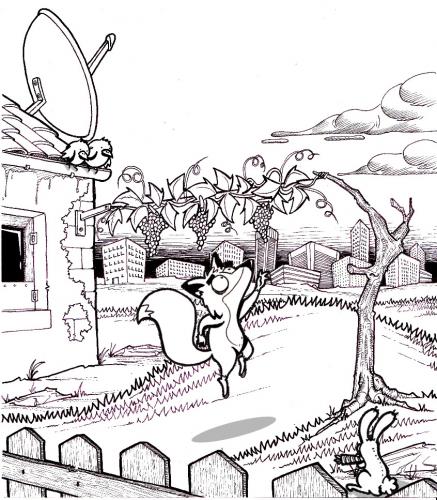
, for those who don't know, is the ability to hold two conflicting ideas at the same time. An old example of this idea (and how the expression "sour grapes" came to be) is in the fable The Fox and the Grapes (ca. 620–564 BCE). In the story, the fox sees some high-up grapes and wishes to eat them. When the fox is unable to think of a way to reach them, he surmises that the grapes are probably not worth eating, as they must not be ripe or that they are sour. This example follows a set pattern: one desires something, finds it unattainable, and reduces one's dissonance by criticizing it. This of course is just one example. Overall, cognitive dissonance is holding an idea in spite of evidence to the contrary, and then trying to make peace with it, such as dismissing one idea (for instance, saying 'the grapes are probably bad anyway' or 'that second bits clearly not true')

As an example
I am a true Viking. Vikings died out more or less in the 11th century. It is now the 21st century

Clearly Vikings are still alive, and I am the last!

Evidence to the contrary!

The study specifically was targeting the 'Ground Zero mosque' controversy in the news. Everyone remember that? Was all there was on the news back in September? Anyway, they found that only one third of the people who had previous ly heard (and believed) the rumors regarding it changed their minds after overwhelming evidence to the contrary.

The false rumor used to this study was that Feisal Abdul Rauf the Imam that's backing the Islamic cultural center who is a terrorist sympathizer who's refused to condemn Islamic attacks on civilians this in spite of the fact that he DOES like here, go to 5:36). The problem with this little tidbit is the fact that there's NO EVIDENCE to support it.

The two professors Kelly Garret and Erik Nisbet found 750 people via online survey and exposed all of them to various rebuttals against the rumor, including different pictures next to the question. For some, no picture was including while in others, a picture of Rauf surrounded by people in western style business attire. Leading to 1 in 4 people changing their minds that the rumor was in fact false. But what actually is interesting about the study is how little it took to discredit the rest of the information. For instance, when the picture had the Imam surrounded by people in traditional Arab clothing, the rebuttal was ineffective.

In addition, having other texts in the rebuttal could also change opinion, such as Rauf's statement that America was partially to blame for harm it's policies have caused the Middle East, though still emphasizing that terrorism is not an answer to the problem.
This leads to a disturbing thought that tradition journalism (which tries to get 'both sides of a story') will actually hinder persuading people to the truth

Garrett and Nisbet did emphasize that, while the 750 people surveyed represented a broad range of adults, it was not a representative sample size adequate for all Americans . This means that the actual numbers may be taken as trends rather than as precise measurements...though this does little to help me sleep at night
So where's this leave us? The data SUPPORTS giving a one sided opinion, because any evidence to the contrary will have people keep their previous view. This leads to some difficult moral dilemmas as well, since most of the time the 'facts' are not truly established until later, and in the nation we support the 'all opinions are valid' stance.
Well, I could go into a heartfelt and deeply philosophical discussion about the nature of right and wrong and what should be done about this

Or, just end on a comic

I think I'll end on a Dilbert comic (credit to Scott Adams)


Everything is fine....


Thanks for reading

Mick

October 19, 2010

Electricity, Electrons and Educational Institutions

I do so adore alliteration

I've thus far avoided mentioning my college, The Ohio State University, some of that is not to sound overtly favoring them, another part is not always reading their science updates. It is required that you say 'The' by the way, need those definite articles. Otherwise we get confused with Oklahoma State...or something

However, I have now found something interesting, special thanks to people who send me articles by the way

OSU has learned a way to get electricity from a single electron, which will change not only energy efficiency but data processing. Before I get to the nitty-gritty of precisely HOW they do this, I think a physics lesson (or reminder) is in order.

Electrons! The things that orbit the nucleus. Have a negative charge. The flow of them causes electricity (static and otherwise). Electrons have a negative electric charge and, as a result, repel each other. The fact that they repel each other is why we feel things and what makes thing's 'solid'. Atoms are after all 99% empty space, and it's only electron's repulsion of each other that gives atom's substance and connects them with others.
Electrons also have a thing called 'spin' which is precisely what it sounds like, a type of angular momentum found in circular bodies who are affected by forces in an otherwise empty space (much like how the Earth rotates)

So yeah, they're important little subatomic particles.

Now that I've set the stage, researchers at The Ohio State University have showed that there is a way to harness an electron's spin in order to generate a small amount of electricity by making one side of a semi conductor (a material with electrical activity due to electron flow, somewhere between a conductor and an insulator) warmer than another

Why is this important, apart from scientific curiosity? A technology in development uses the spin of an electron to store computer data, the binary ones and zeros, as "spin up" or "spin down." These spin-based electronic, called spintronic, devices generate little heat, which will allow computers to process at faster speeds. Computer data is stored as the presence or absence of an electron charge. The problem is that heat generated in the process limits how fast a computer can process data according to Joseph Heremans, THE Ohio Eminent Scholar in Nanotechnology, and Roberto Myers, THE assistant professor of materials science and electrical engineering at THE Ohio State University (definite articles are fun).

In the experiment, they heated one side of the sample, and then measured the orientations of spins on the hot side and the cool side. On the hot side, the electrons were oriented in the spin-up direction, and on the cool side, they were spin-down. The researchers also discovered, to their own surprise, that two pieces of the material do not need to be physically connected for the effect to propagate from one to the other.

They scraped away a portion of the sample with a file, to create two pieces of material separated by a tiny gap. If the spin effect were caused by electrical conduction (electrons flowing from one part of the material to the other)then the gap would block the effect from spreading. Again, they applied heat to one side. The effect persisted.

They figured that each piece would have its own distribution of spin-up and spin-down electrons. However, one side of the first piece was spin up, and the far side of the second piece was spin down. The effect somehow crossed the gap.

The original spin-Seebeck detection by the Tohoku group baffled all theoreticians at the time. This study confirmed their findings and has opened the door for future technology and even more efficient data processing within computers.
Definite articles baby

September 19, 2010

Vampires! And why Garlic is your best friend

I am back boys and girls and ready to go for this blog. Though I'm sure it's mostly self indulgent for me I will still continue to post, even if my audience is an assortment of friends and family (thanks by the way!)

So today I'm going to go over Vampirism.


No, not that guy. Too classy


No not him. Far too many redeeming characteristics


Oh hell no.

No no what I'm talking about today are the real blood suckers of the world, creatures that practice hematophagy. I am of course speaking of the typical annoying pests that come to mind, mosquitoes, lice, fleas, ticks, Edward Cullen, lawyers, leeches all of them share the same urge to drink blood. Now why is that?

Well first lets go over what blood (human blood for simplicity's sake) is made of. What we call 'blood' are in fact red and white blood cells suspended in plasma. The plasma itself is approximately 91% water, providing the necessary water for any given organism, and contains dissolved proteins, glucose, carbon dioxide, mineral elements, hormones, platelets and the blood cells themselves. The most abundant cell in blood is of course the red blood cell which carries oxygen using a heme group.

Now looking over this list, it becomes pretty apparent that blood is pretty nutritious and would satisfy many creatures in their search for water, protein, minerals etc... In fact the Maasai of Tanzania actually drink blood straight from their cattle, offering further proof of its inherently nutritious, if slightly off-putting, nature.

So we've established why these little bloodsuckers...well suck blood. For creatures adapted to get it it is a constantly renewed resource (in fact a reason for feces to be brown is its coloration by red blood cells, so every day blood cells are vacated and replaced). They are however, almost universally considered to be pests at best. More often, however they are considered dangerous as (mosquitoes and fleas specifically) have been known to carry many different kinds of deadly diseases such as Lime disease, West Nile virus, among others.

Now, back to the whole Halloween theme here.


Commonly held mythology states that garlic repels vampires. I always thought that was odd. Crosses I understood, assuming Vampires were strictly demonic, but garlic always puzzled me. It seems though that our mythology is teaching us a lesson. Garlic does in fact prevent mosquitoes as well as other bloodsucking creatures. The reasons for this are many. Firstly, mosquitoes don't really have an olfactory sense like you or I have, they only smell a very narrow range of scents, most specifically a sweet scent. As a result of garlic's rather pungent smell (caused by a relatively high concentration of diallyl disulfide) covers the scent to mosquitoes and allows the person to get by unbitten. Thanks to convergent evolution, many other creatures share the same kind of ability to find their next meal. In addition garlic possesses the chemical allicin, which is garlic's natural defense mechanism against pests anyhow. So in effect having garlic or eating garlic makes you have poison in your veins to the parasites, and makes you smell bad to them (and your significant other)

Keep this in mind folks, as bed bugs and fleas are running rampant this time of the year. A good cheap way to deal with them is to make them not want to bite you

Thanks for reading

Mick

August 17, 2010

Batman without the Bat.


The Comic, and entertainment industry on the whole, has never been particularly creative when it comes to naming their creations. Super-man, Spider-man, Bat-man, the list goes on. In the wake of recent news however, Mr. Wayne may need to rethink his moniker.


Recent studies show that the most common bat in America, M. lucifugus, better known as the little brown bat, is getting closer and closer to total extinction, being struck by White-Nose Syndrome, which was discovered in 2006. WNS is quickly decimating the bat's and at this time scientists barely understand how it works, let alone the cause of the ailment.Some researchers believe in it caused by a foreign mold that has entered the caves, but that doesn't fully explain the disease present. What is known however is that bats are dying in the millions, and quickly. Researchers have even been quoted saying that this is possibly the worst threat to bats within the span of human existence.


Many algorthms made to predict the decline have shown that these creatures could go extinct in a matter of decades. If WNS does not get them, their small resulting population would make them suseptible to other problems: predation, a colder winter, or just bad luck.


Apart from the implications that will occur for Gotham's Dark Knight, the decline (and possible exintiction) of bat populations in Eastern America lead to several bad consequences. Firstly, cavern ecosystems (which in each cave is unique) would be decimated, as bat's provide much needed nutrition from the outside world. More pragmatically, bats are one of the most pervasive insect killers out there, more effective than most insectosides. Death of bats leads to fewer crops, and in turn, raised food prices...


The disease affects many different types of bat, including those which were already perilously close to extinction, such as the Indiana bat. It's a race against the clock to find a cause, and potential cure, for natures little bug zappers.


This like so many other things affecting the world is a dire threat; if not for a sustainable ecosystem, then purely for the caped crusader.
Thanks for reading
Mick

August 11, 2010

The Next Potential Pandemic of Paranoia


Alliteration, good stuff.


Globalization is a marvelous thing. We can literally circumnavigate the world in perhaps a day, we can talk to people around the world in an instant. Information, technology, ideas, culture, all of these things can be exchanged and and truly makes humanity seem closer to 'the human race' as opposed to 'white, black, chinese, indian, etc... The unfortunate side effect of this


So you will recall my article about swine flu. Based on its genetic structure and other factors, it was unlikely to have been a serious threat save to people with compromised immune systems. It simply did not have the genetic pedigree to be a 'killer'. That in combination with a quick government response and a general paranoia about getting sick effectively cut off the disease before it could take hold and further mutate into something more deadly. This is all a moot point of course as most experts agree that we as humanity are severely overdue for a massive pandemic that would kill many people...

In case you guys thought swine flu was gone by the way, cases have popped up in India. Witha death toll reaching as high as 29. Much like many other kinds of diseases, once it comes to light it is still with us forever more. Even the Bubonic plague, otherwise known as the Black Death, which killed off a solid third of the world's population, still exists today in isolated pockets, particularly in the American Southwest.


Speaking of forgotten pandemics. Does anyone remember bird flu? Those few months were whenever we saw a dead bird we skirted away...and when chicken breasts suddenly became much cheaper? That strain is still around traveling between birds. Scientists are trying to track it and its evolution, though how well that will work is still open for debate. Just to be sure, and of course increase paranoia, scientists have created a new strain of Bird flu thats much more virulent in humans (however they did it in such a way as would be doable, viable, even probable in non-lab conditions). These viruses are changing and evolving rapidly, such that neither our immune system, nor our use of antibiotics, can keep up with them. Pleasant dreams


I meanwhile will be eating peanuts at the bar, and trying to breath in coughs, as well as shaking hands with people and generally trying to be a social entity. Since with most illnesses you have to have direct exposure.


It will be FOR SCIENCE after all.


In other news, there's officially a minifridge that gets close to absolute zero....where was this when I needed a cold beer right away?

August 10, 2010

Tetris with Proteins

Life is messy.


An Example of Entropy
Very rarely in nature is there a straight line, or a single element. Life is messy, things mix, combine, bend and knot. The universe favors lower energy states, higher order systems require energy to be put in for them to work. As a result thingsare seldom ever neat and tidy. This is true of society, my bedroom, and of much smaller scale things, including DNA, RNA and proteins.


DNA, made famous for it's double helix formation, has even greater structure, going into tertiary and even quarternary structural units. The same is true of RNA and perhaps more importantly, proteins. Why is a protein important over DNA and RNA for it's form? DNA and RNA are, ultimately, blueprints for the body. Their structure is a result of what is easiest and lowest energy formation (caused because of negative charges, hydrophobicity etc...).


Proteins however can derive their function solely based on their shape, forming enzymes or otherwise. If a protein has an incorrect structure it will not react properly, and other biologic functions would not work, making the processes essential to life nealy impossible. As such outside of indentifying the constituent parts of the protein, another important aspect is determining it's structure. This is typically done using a Rosetta program via computer to determine the best possible arrangement of amino acids. The Rosetta program does well, except it does get stuck, as in getting to a lower energy state, sometimes you must cross through a higher energy one, causing the program to stop

So why am I going over protein structure and entropy? Much like the jellyfish article, I found another that was weird enough to catch my attention.


Protein folding is now a MMO game.

The use of the sorting algorthm is still invaluable, as the proteins can be several thousand amino acids long. However reaching the ending point of the program, researchers decided to make a game out of it, giving the virtual proteins to an online community to solve, getting points for making the protein have a lower and lower energy required. While algorthms and computer programs are extremely useful in science, human beings are definitely still needed... so screw you H.A.L.

The same tactic has begun to be used by astonomers and in other fields


I'm hoping in the future a biochem degree will boil down to a giant video game.

August 3, 2010

Regeneration of organs, limbs, not solely fiction now


Science has made many strides in the field of medicine, but now it is delving into what we had once though to be science fiction and only for Canadian born super-heroes.


In general cell generation is limited. Cells take time to divide, and cannot be reprogrammed to form other biological machinery. The skin cells cannot regrow bone, kidney cells cannot regrow a lung, and so on. The ability to regrow a limb in the multicelluar animal kingdom is limited to certain types of lizards, (and only their tale) as well as worms. Once a cell is programmed to preform a certain function (which is decided fairly early on in life) it thus far can't be reprogrammed to form new tissue.


That's starting to change....


The first instance I'll talk about is about joint replacement. Today's titanium joints work fairly well, but need to be replaced after about 10 years. Replacing them, however, is a challenge for both the patient and the surgeon and often involves weeks of rehabilitation. A team from Columbia University has proposed a way to deal with this problem: inserting a chemical-infused scaffold generates new tissue by attracting stem cells. The scaffolding, meant to resemble a joint, was infused with growth horomone to encourage cell generation in several rabbits. Thanks to the added growth factor protein, the rabbit's own stem cells naturally migrated into the scaffold and regenerated both the cartilage and the bone beneath it. The surgery to replace the joint is similar to now, except there would be no need to go back into the patient, as the joint would be natural. This is a good proof of concept in order for future regeneration of boneloss. However young rabbits are already well known for their ability to heal, and what rabbits that received the scaffold without the chemical only healed somewhat. Growth horomone while natural can lead to complications in older patients, so it would need to be monitored...


Regardless however, it is a solid proof of concept that this indeed can work and that a patient's own body can heal itself, given the right tools. This would be a marked improvement over prostetics and synthetic limb growth both of which hold the possibility of the patient's body rejecting the new limb.


Every adult creature still has stem cells, but they grow in limited numbers and are typically found in the bone marrow and therefore later in the blood, younger creatures tend to have more of them, as their bodies are still growing. Unlike other cells they may differentiate and change their function (lung cell, heart cell etc...). Stem cell research has had some bad press due to it's use of fetal stem cells, but there is a greater use of adult stem cells, which poses less ethical quandries. Stem cell research opens up alot of possibilities for future medical advances.

Meanwhile over at Yale great strides are being made in the field of organ growth. In a way similar to the one above, a scaffolding of a lung was used and then was implanted with stem cells, which then regrew the lung. It was not perfect however, as the newly formed lung did seem prone to blood clots. The organ was not reconstructed from the mouse's own tissue as well so it was prone to being rejected as a foreign substance by the body as well. It was reported that great stem cell research would be necessary before this would be applicable for use on a human.


There's alot of promising technology in the offing... it still needs work however

My love of science fiction is quickly being overshadowed by the fact that the world is BECOMING science fiction.

Anti-matter found within Earth

A particle detector located about a mile beneath the Gran Sasso mountain in Italy has detected something extraordinarily interesting.

The presence of antimatter within the earth.

Researchers in Italy found the presence of geonutrinos, the antimatter equivalent of neutrinos (lightweight neutrally charged particles that are created in the sun, and when cosmic rays strike an atom). Antimatter is in essence the polar opposite of matter, for example, where a normal electron has a negative charged for instance, an antimatter electron has a positive charge. Antimatter is formed whenever high energy collisions take place, and upon colliding with matter, will annihilate releasing detectable levels of gamma radiation

Neutrino's, having next to no mass, are incredibly hard to detect by normal means...which is why the detector is a mile underground, away from all other solar radiation. The detector is a massive nylon sphere containing 1,000 tons of hydrocarbon fluid. Around the sphere is a huge array of ultra-sensitive photodetectors that can hopefully spot the neutrinos passing through. And all of that is encased in a stainless steel sphere that in turn is suspended in 2,400 tons of purified water inside yet another steel sphere 59 feet in diameter.


The device was originally built to detect neutrinos from solar radiation, but it was quickly determined that it could also be used to find their anti matter cousins, geoneutrinos.


Geoneutrinos are thought to be the result of radioactive decay of uranium, thorium and potassium inside the Earth's crust (its outermost layer) and mantle (the layer below that, extending to 1,800 miles, or 2,900 km, beneath the surface). Radioactivity falling squarely under the 'high energy collisions' mentioned above.


Apart from discovering the inner workings of the earth, there is a more practical aspect to this discovery. Measuring geonutrinos scientists can learn more about how decaying elements add heat into the Earth's core. Whether radioactive decay dominates the heating in this layer, or merely adds to the heat from other sources, is still an open question. As a result of it's ability to detect heat spikes within the Earth's Core however, this could potentially make for a method of early detection for earthquakes and volcanoes


In spite of my wishes however there is neither enough of the stuff to either make for an energy source, nor for a bomb (ala Angels and Demons), what a pity.


Apologies for the lack of posting, illness got the better of me. Expect more articles soon


Thanks for reading,


Mick

July 23, 2010

The Obesity Epidemic


A recent study has shown that the skinniest state in the U.S. is fatter than the fattest state only 20 years ago. The thinnest state currently in the union is Colorado with 55% of the population overweight and 18% obese... So 1 in 5 people in the thinnest state is considered a health risk. Only a few decades ago this wasn't the case, there was obesity to be sure, but it was more a sign of prosperity or the like, rather than regarded as the illness it has been called today. The main difference in our interpretation of the condition appears to be its prevalence..


So what happened?


As with most problems, there is never a single cause to it, but rather the culmination of many factors coming together.

Firstly, since the industrial revolution the amount of physical jobs has decreased sharply, in favor of using machines and automated systems, with the workforce shifting towards more sedentary jobs, like the one I possess. Going along with this many works of media (television, video games, computers, etc) all consist of sitting down and little movement.


This is not to say I'm an advocate for being a Luddite, this is progress encourages a more cerebral society that values knowledge over brute force...hopefully. Exercise is not our cultures definition of a good time, we get home and we want to relax, in general. Sociology isn't my specialty... Anyhow, moving on...

Genetics are also at play here. A study conducted by Tulane's Department of Epidemiology has shown that there are heritable phenotypes for obesity that range from as low as 6% of a group to as high as 85%. There are a number of conditions as well with obesity as a symptom. These of course tend to be very rare conditions, but none the less inflate the numbers of the whole. Far less rare conditions however, include diabetes and depression, two conditions that are extremely pervasive in the US, both of which have been linked to obesity (and both links are shown to be causative).

The next issue comes to a very simple cause. Our food and drink. Let us first be honest about something, it is not cheap to be healthy in the U.S. Not only that, it's time consuming to eat healthy in the U.S. Making a home cooked meal, in general, is almost always healthier for you than going out to eat, not only are you doing the work (and burning off calories) but you can control precisely what it is the meal. The reason that most restaurants taste so good is because they tend to slather their product in fat and salt. And going out to a 'healthy' restaurant is more expensive, being a specialty shop they raise their prices to match with a limited clientele.

Now to address the elephant in the room....

High fructose corn syrup.
High fructose corn syrup, as the name implies is made from corn. It is originally a syrup of glucose (the natural sugar in sweet corn) and is enzymatically converted into fructose (which is in fruit). In theory it is 50% glucose 50% fructose, but it can contain up to 80% fructose and 20% glucose. It is frequently used as a sugar substitute


I've seen some ads recently advocating the stuff saying that 'it has the same effects as sugar'. This is, in part, true. High fructose corn syrup in terms of caloric intake is no worse than regular sugar, honey, and other sweeteners... There are other issues with it however. For one thing a study has shown that it contributes more towards obesity than other sugars, due to it's ability to repress the chemicals behind your appetite, making the consumer unaware of when they are in fact 'full'. Another is that apparently there is mercury found in about half of all HFCS tested, mercury contaminated caustic soda has been used to produce HFCS in some companies...


Ignoring the possibilities of neurotoxins and enzymatic inhibitors there is an even larger problem with the stuff.


It's everywhere.

A cursory look over my pantry revealed it was in yogurt, industrial bread, cookies, salad dressing, tomato soup and ketchup. The issue is that this ingredient, and the calories it packs, is virtually in every processed food out there.

This brings back another question... Why use it?


The simple answer? It's cheap. Without delving into politics, the U.S. government subsidizes corn production, making the product dirt cheap. While this does allow for many people to be fed that wouldn't it causes the opposite problem of people becoming too fat (corn was cheap before however, the government simply made it cheaper).


So what comes from this long rant? Obesity is caused from a variety of sources and preventing it would be a herculean task. Or the fact that diabetes, closely related to obesity, has risen sharply in the past few decades limiting the lives of many. Or perhaps simply that high fructose corn syrup has many chemical properties that have enzymatic and neurochemical ramifications?


I think it means I'm going to stick with my caffeine addiction...
Thanks for reading


Mick